
A Uganda Gorilla Safari is a Ugandan safari designed to give travelers the opportunity to come face-to-face with mountain gorillas in their natural habitat. A Uganda gorilla safari can be either a gorilla trekking safari or a gorilla habituation safari.
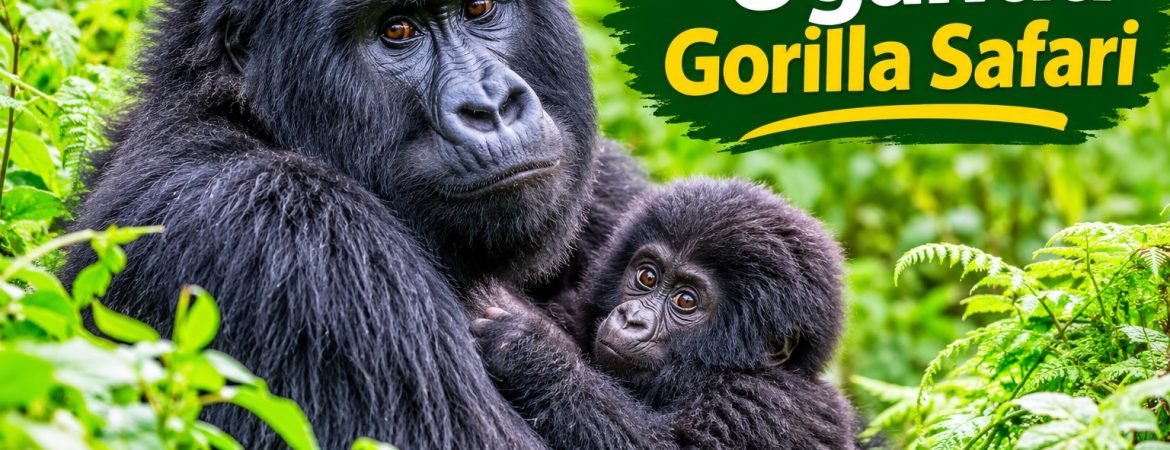
Gorilla trekking is conducted in groups of 8 people, with each group allowed to spend one hour with the gorillas after finding them. Gorilla habituation, on the other hand, is conducted in groups of 4 people, who are allowed to spend up to 4 hours with the gorillas after encountering them.
A Uganda gorilla safari is the highlight of the country’s tourist experience when it comes to wildlife. Uganda, famously known as the Pearl of Africa, is home to over 13 primate species, with almost half of the world’s mountain gorillas found in Bwindi Impenetrable National Park and Mgahinga National Park.
A safari to Uganda without visiting these remote, gentle apes is considered an incomplete Uganda safari. Gorilla tracking takes place in the two national parks, which are located in the southwestern part of Uganda. According to the last gorilla census, there are currently 1,004 mountain gorillas in the entire world.
In Uganda, there are 22 fully habituated gorilla families available for tourism, with 2 others set aside for research and gorilla habituation. The total number of gorilla permits issued per day is 176 for gorilla trekking and 8 for gorilla habituation.
The largest gorilla family in Uganda is the Nyakagezi family, which has over 80 gorillas. The 15 habituated gorilla families, together with those that are not yet habituated, account for over 400 gorillas in Bwindi and Mgahinga National Parks.
Gorilla trekking takes place in five sectors: four in Bwindi and one in Mgahinga National Park. The four sectors in Bwindi Impenetrable Forest include Rushaga, Nkuringo, Buhoma, and Ruhija, while the sector in Mgahinga is called Ntebeko.
Anyone planning a Uganda gorilla safari must secure a gorilla permit in advance. It is advisable to book a gorilla permit 2 to 3 months ahead if travelling during the high season and at least one month in advance during the low season.
Currently, gorilla permits cost 800 USD per person. There are several requirements for trekking gorillas in Uganda, including being at least 15 years old and having a valid passport, among others.
One can obtain a gorilla trekking permit directly from the Uganda Wildlife Authority online or from its offices in Kampala if already in Uganda. Alternatively, travelers can use reputable tour operators offering complete Uganda gorilla safari packages that include the gorilla permit.
Uganda is unique in that some of its national parks are home to more than one primate species. For example, Kibale Forest National Park has over 12 primate species, Bwindi Impenetrable Forest National Park is home to over 3 primate species, including mountain gorillas and chimpanzees living in the same forest, while Mgahinga National Park is home to both gorillas and golden monkeys.
Your Uganda gorilla safari is therefore enriched by the opportunity to encounter more than one primate species during your trip, allowing you to kill two birds with one stone.
Best Time to Do a Uganda Gorilla Safari
This is one of the major questions guests ask when planning a trip to any destination. Good timing gives travelers a better chance of enjoying their experience and making their dreams come true.
For other wildlife safaris, such as Big Five game viewing, good weather conditions can make wildlife easier to spot, while birders often prefer the rainy season when birds are nesting.
Unlike these experiences, a Uganda gorilla safari is unique because it can be done throughout the year. Since the gorillas live in high-altitude tropical rainforests, the weather is relatively similar throughout the year. They can sometimes be easier to find during the rainy season when food is plentiful and they do not have to move long distances. During the dry season, however, gorillas may travel several kilometres in search of food and water.
A Uganda gorilla safari is best enjoyed during the dry months of the year, when rainfall is limited and the trekking trails are less slippery, making hiking easier. The gorillas also tend to come out early and return to their nests later as they spend more time moving around the forest. During the rainy season, the gorillas sometimes nest in trees and may come down later.
The best months for a Uganda gorilla safari are December to early March and June to October. Uganda experiences two rainy seasons: the longer rainy season from March to May and the shorter rains in November.
What If I Fail to See Gorillas? What Happens?
This is one of the most common concerns travelers have when planning their trip, especially when they consider the cost of a gorilla permit. Although the permits may seem expensive, the experience of gorilla trekking is worth every penny. The costs of protecting and conserving gorillas are also very high because these animals are vulnerable and require continuous conservation support.
During your Uganda gorilla safari, the highlight is gorilla trekking, and the chances of seeing the gorillas are estimated at 99%. In fact, no cases have been reported of guests failing to see the gorillas while trekking with us.
However, nature is unpredictable. The Uganda Wildlife Authority has made it clear that if a group fails to see the gorillas during the trekking experience, a report is submitted by the game ranger, and the guests are given a second opportunity to track the gorillas at no extra cost.
However, if the failure to complete the trek is due to personal circumstances, such as a lack of physical fitness, sickness, allergies, or other individual limitations, the Authority is not responsible.
It is the duty of the tour operator to advise you as you prepare for your Uganda gorilla safari so that you come with the appropriate equipment and follow the recommended packing list.
Can I Do Gorilla Habituation During My Uganda Gorilla Safari?
Yes, you certainly can. Gorilla habituation is one of the best-kept secrets and most enjoyable gorilla experiences, available only in Uganda for mountain gorillas and in Congo for lowland gorillas.
Only 4 people are allowed to participate in a gorilla habituation experience, spending up to 4 hours with the gorillas after finding them. This experience is particularly popular with researchers and filmmakers who want to produce detailed documentaries about the lifestyle of mountain gorillas.
In Uganda, gorilla habituation is conducted exclusively in the Rushaga sector of Bwindi Impenetrable National Park, where two gorilla families have been set aside for this experience.
Travelers are advised to book well in advance, preferably more than 2 months ahead, to secure one of the 8 available permits issued daily. Each permit costs 1,500 USD.
A Uganda gorilla safari is an exceptional and unmissable experience when planning a trip to Uganda and exploring the beauty of the Pearl of Africa.

